

How do you stay present in a world that keeps moving without you?
“Milvio” doesn’t offer easy answers. Instead, director Thales Corrêa crafts something rarer — a film that sits with loneliness long enough to make connection feel like a miracle when it finally arrives.
On paper, it sounds like a tech story: a sick kid attends school through a telepresence robot. But Corrêa isn’t interested in the gadget. He’s interested in the boy behind the screen — and the girl who chooses to see him there. What unfolds is a tender, aching middle school love story that just happens to involve a machine with a face.
At its heart, “Milvio” is about visibility. What does it mean to be seen when you can’t physically be in the room? When your presence is a wheeled screen navigating hallways?
The film earns its emotional weight by never treating the robot as a gimmick. It’s a lifeline — but also a barrier, a constant reminder of everything Milvio has lost. When Gabby ties a friendship ribbon onto the robot’s frame, she’s not decorating hardware. She’s reaching through it to him.
Corrêa has a gift for working with young performers, and it shows. He creates space for authentic emotion without tipping into sentimentality, drawing out moments that feel discovered rather than directed. The bullying stings. The small victories land. The romance blooms with the awkward, hopeful rhythm of actual adolescence.
And then there’s Reid Miller.
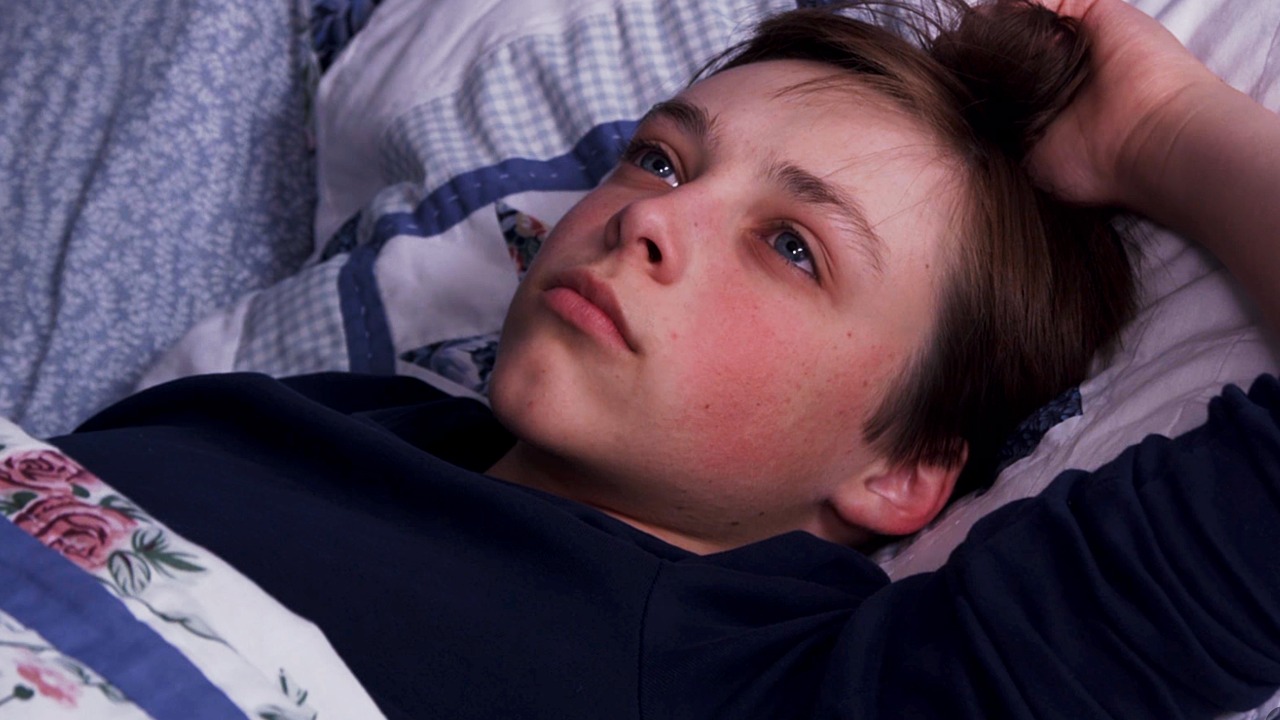
It’s genuinely exciting to watch Miller in one of his earliest roles. The naturalism, the emotional range, the ability to carry a film while barely in his teens — it’s all already there, fully formed. You watch “Milvio” knowing what comes next: Miller would go on to star in “Joe Bell” alongside Mark Wahlberg, portraying Jadin Bell, a real-life LGBTQ teen whose story of bullying became national news. That performance earned him serious critical attention. But here, in this small film, you’re witnessing the spark before anyone else caught on. There’s something special about seeing talent at its origin point.
The same goes for Carrie Gibson, who grounds the film as Milvio’s mother — a woman caught between fierce protectiveness and the heartbreak of watching her son slip away from life. Her performance lives in small gestures: the obsessive cleaning, the worry barely hidden behind routine, the way she watches him smile again and doesn’t quite trust it to last. Gibson has since built a striking career — “King Richard,” Ryan Murphy’s “Hollywood,” the upcoming “Weapons” — and here you can already see the emotional precision that would come to define her work.
Corrêa has an eye for talent and knows how to direct with care. He creates space for authenticity rather than performance, letting moments land without forcing them. “Milvio” could have been saccharine. In his hands, it breathes.
Her warmth as Gabby (Isabella Bazler) gives the film its romantic heartbeat — she’s just a girl in a tree, talking to a boy on a screen, making you believe none of the strangeness matters. Gibson has since built an impressive career: “King Richard,” Ryan Murphy’s “Hollywood,” the upcoming “Weapons.” But here she’s pure potential, already magnetic. Corrêa clearly has an eye for discovering talent early and drawing out performances that feel lived-in rather than directed.
Beyond the technology, this movie is about showing up and refusing to disappear—it’s about the people who see us when we’re at our most invisible
The robot is just how he gets there. What matters is that he arrives.